Shopify Migration & Full Site Redesign
The Challenge
Following Rugs USA's acquisition of Annie Selke, both brands operated on separate legacy platforms resulting in approximately $4M in duplicated tech costs across three properties. Leadership needed platform consolidation through phased migrations: Rugs USA first to establish the foundation, then Annie Selke D2C and B2B.
My Role
As Director of UX, I led migration strategy across all three properties, coordinating design, engineering, QA, and vendor partnerships. I built the unified design system during the Rugs USA migration that enabled rapid Annie Selke launches: 2 months for D2C, 3 months for B2B. The reusable infrastructure proved the strategy worked.
Annie Selke B2B
January 5, 2025
Wholesale Platform
Rugs USA
July 22, 2024
Foundation Launch
Annie Selke D2C
September 30, 2024
Consumer Site
Kickoff
January 2024
Project Start
PROJECT TIMELINE
Shopify Migration & Full Site Redesign
The Challenge
Following Rugs USA's acquisition of Annie Selke, Rugs USA operated on a separate legacy platform from the newly acquired Annie Selke D2C and B2B sites, resulting in approximately $4M in duplicated tech costs across three properties. Leadership needed platform consolidation through phased migrations: Rugs USA first to establish the foundation, then Annie Selke's D2C and wholesale channels.
My Role
As Director of UX, I led migration strategy for all three properties, coordinating design, engineering, QA, and vendor partnerships. I built the unified design system during the Rugs USA migration that enabled rapid Annie Selke launches: 2 months for D2C, 3 months for B2B. The reusable infrastructure proved the strategy worked.
PROJECT TIMELINE
Kickoff
January 2024
Project Start
Rugs USA
July 22, 2024
Foundation Launch
Annie Selke D2C
September 30, 2024
Consumer Site
Annie Selke B2B
January 5, 2025
Wholesale Platform
Two Brand Experiences, One Infrastructure
Built on shared Shopify architecture while preserving each brand's unique identity and visual language.
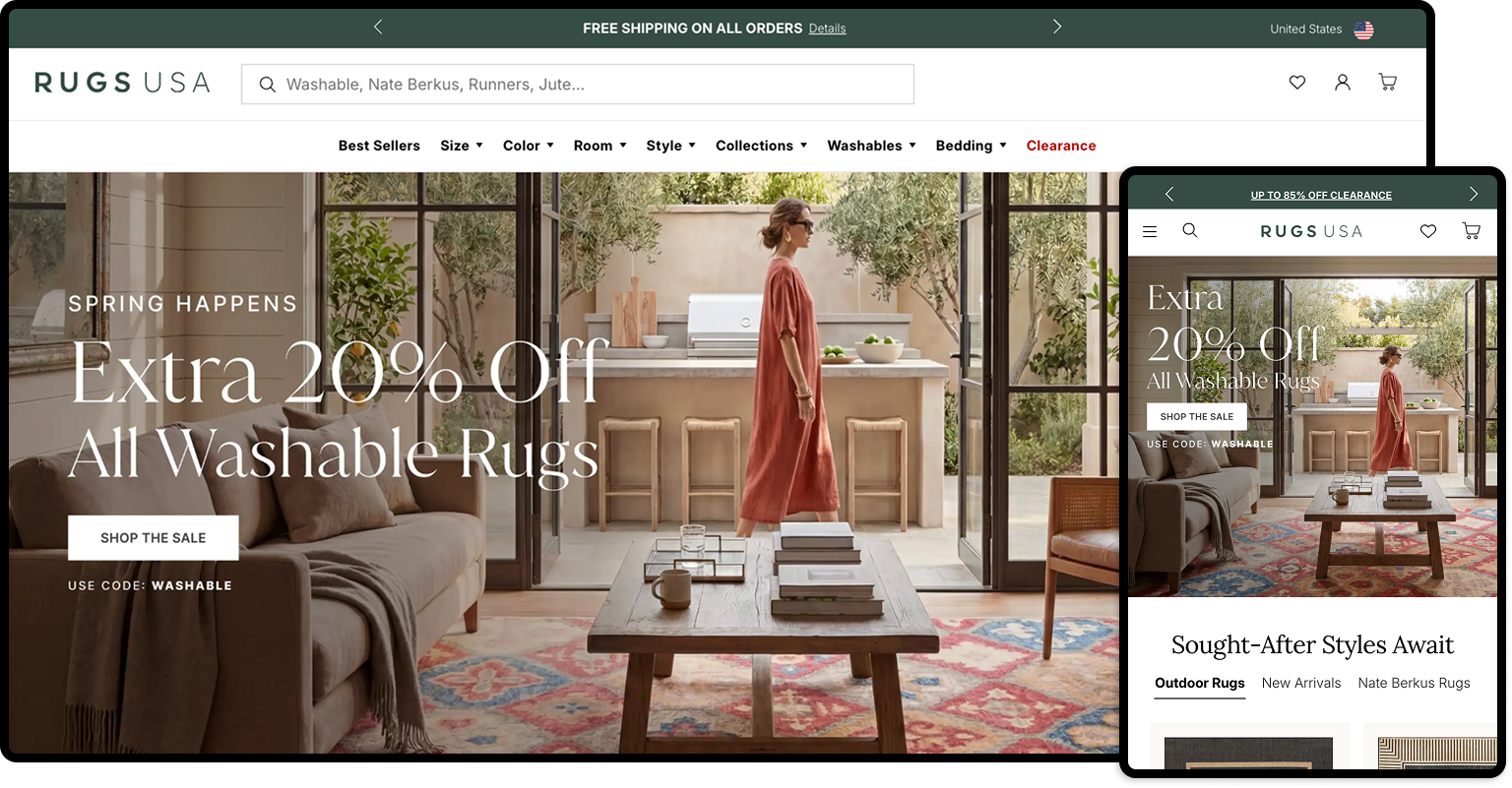
Natural, refined aesthetic emphasizing texture and organic materials. Neutral palette and earthy tones create a calm, sophisticated foundation for any space.
Rugs USA
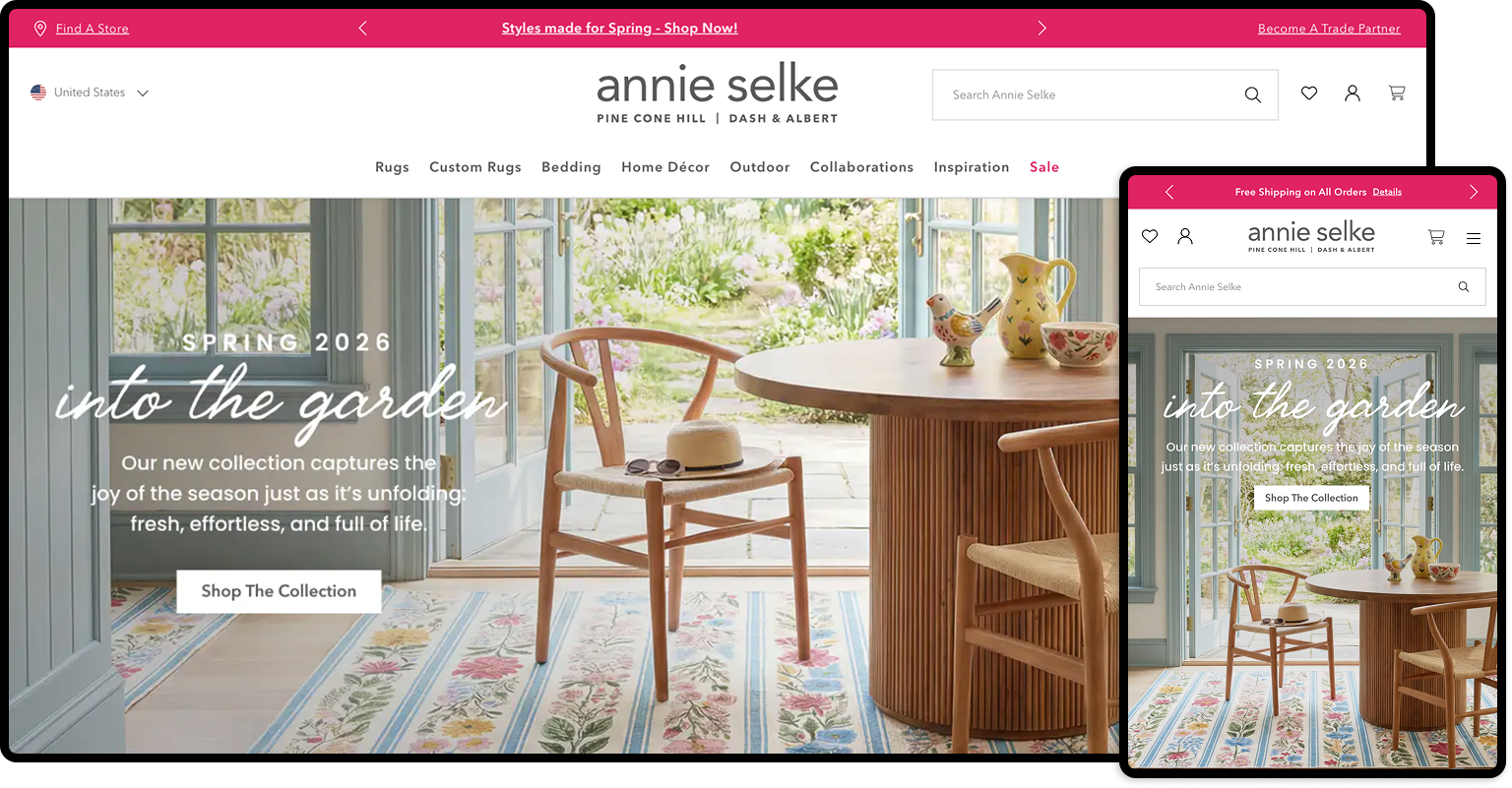
Vibrant, pattern-driven design celebrating color and personality. Bold visuals and rich hues create an energetic, joyful shopping experience.
Annie Selke
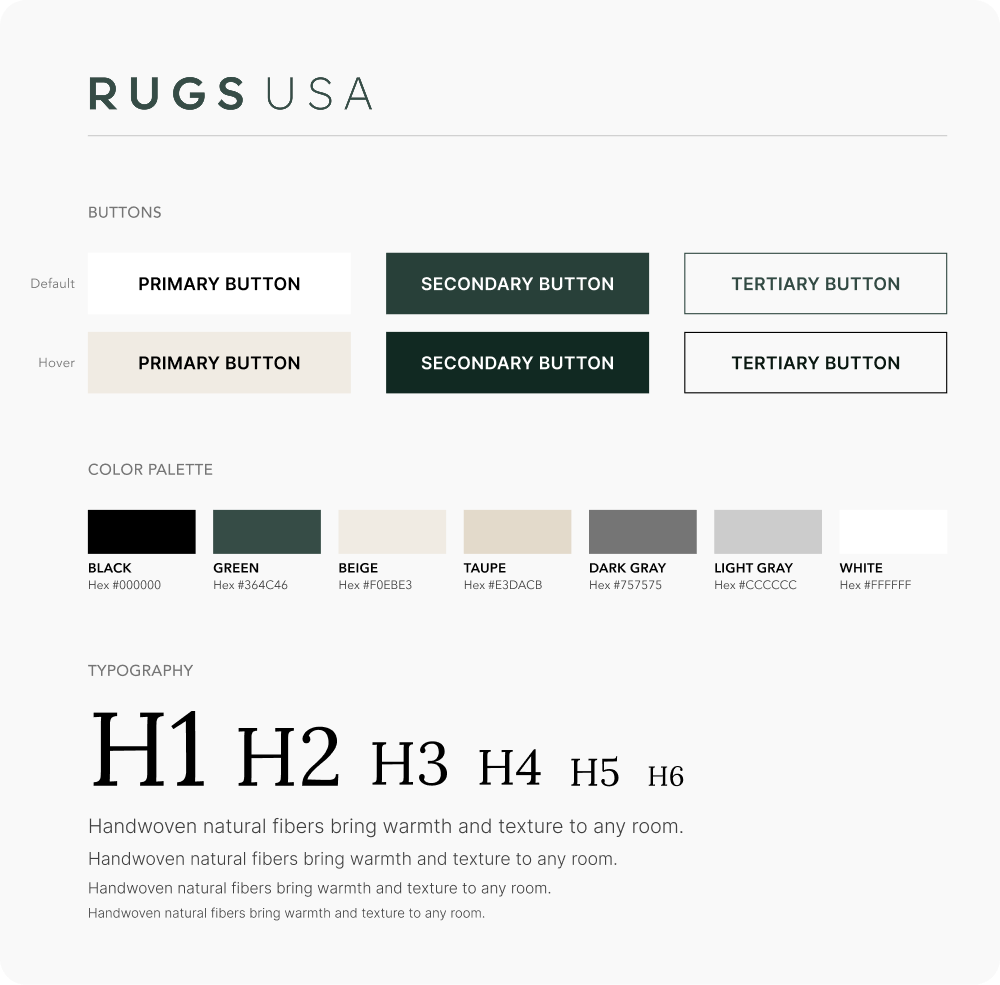
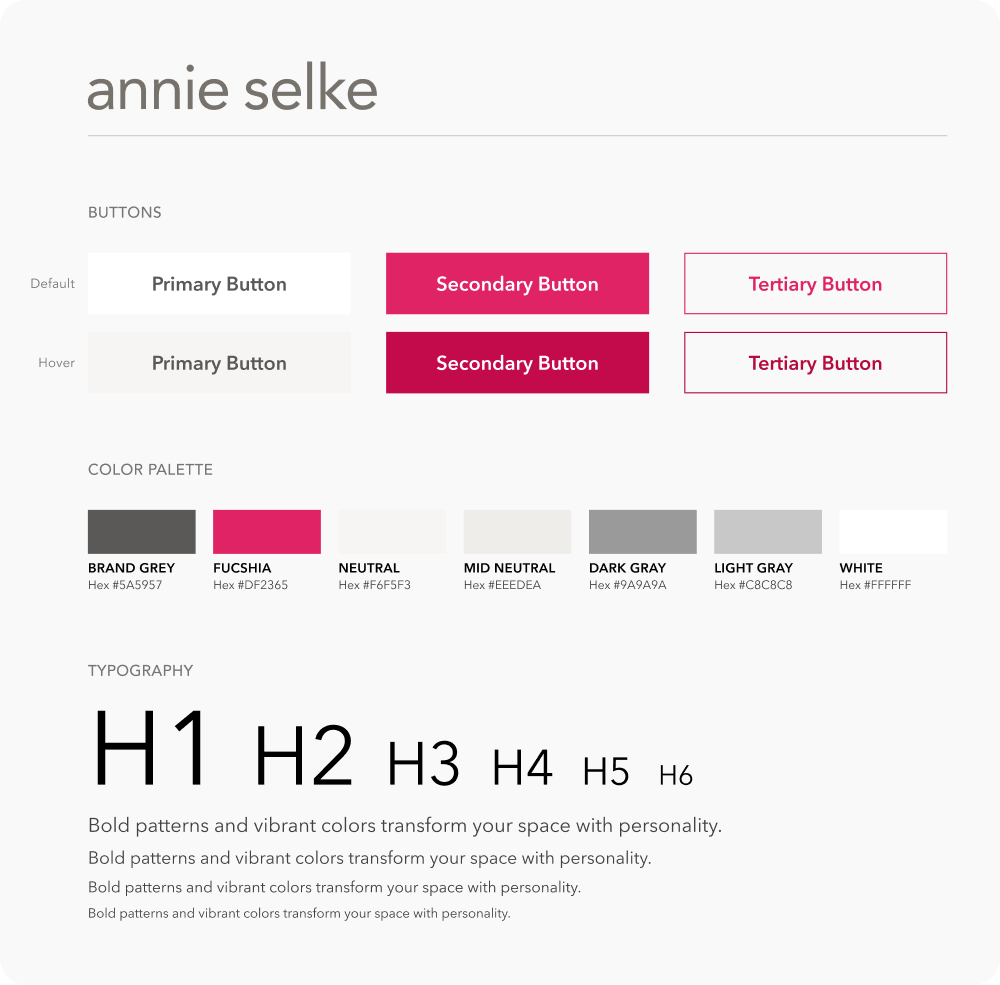
Design System Architecture
Shared component library with brand-specific theming enabled rapid subsequent launches while maintaining visual distinction.
Design Work
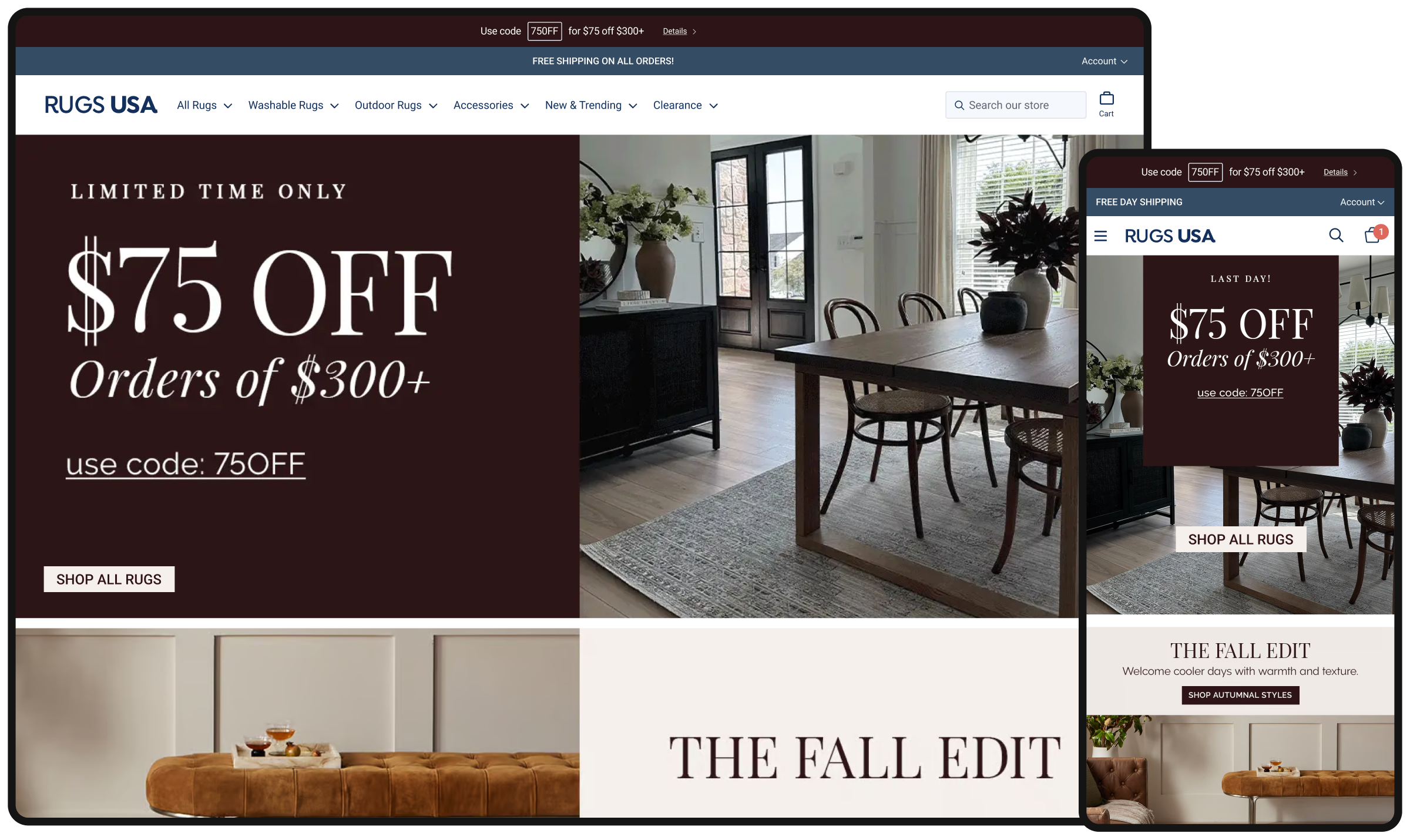
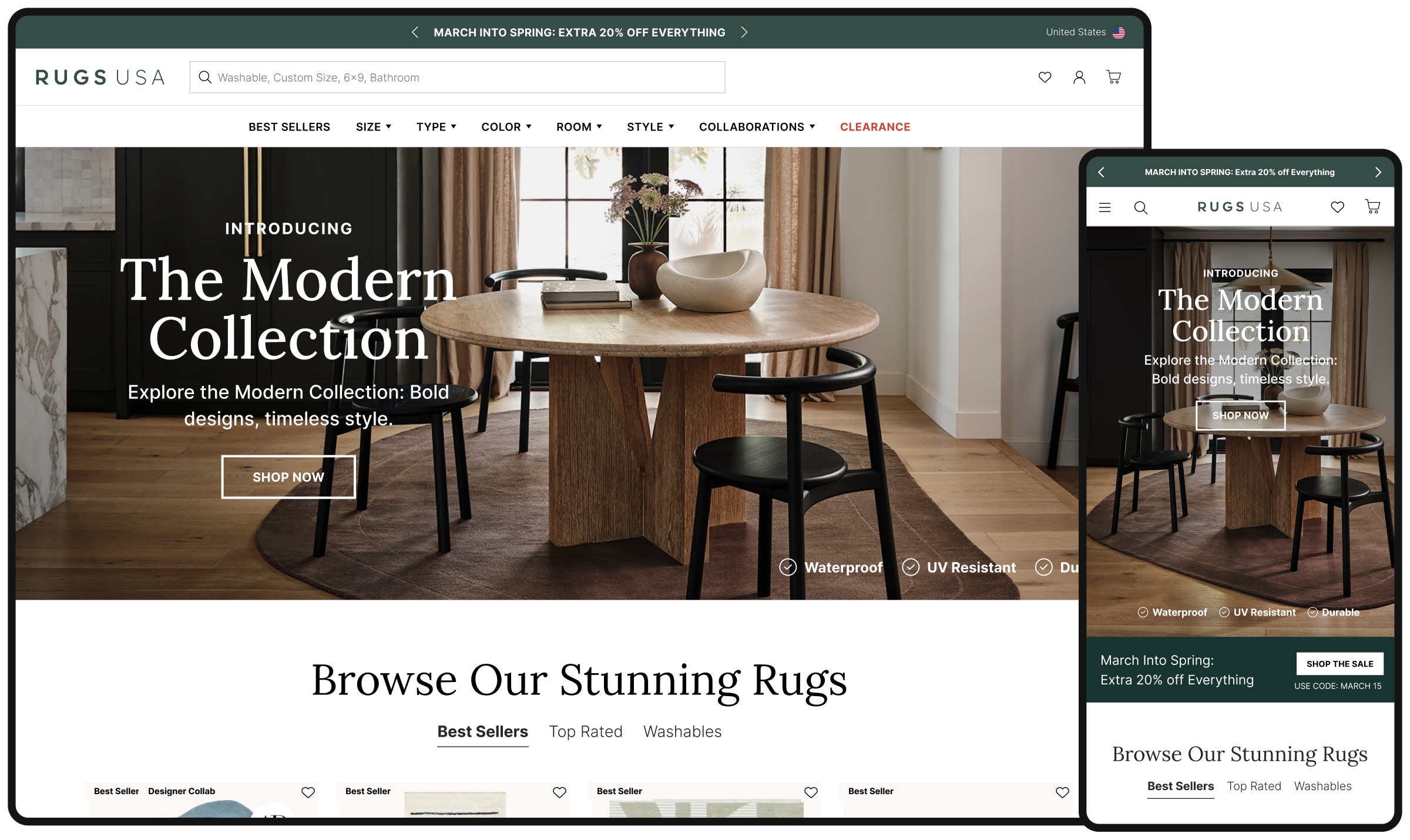
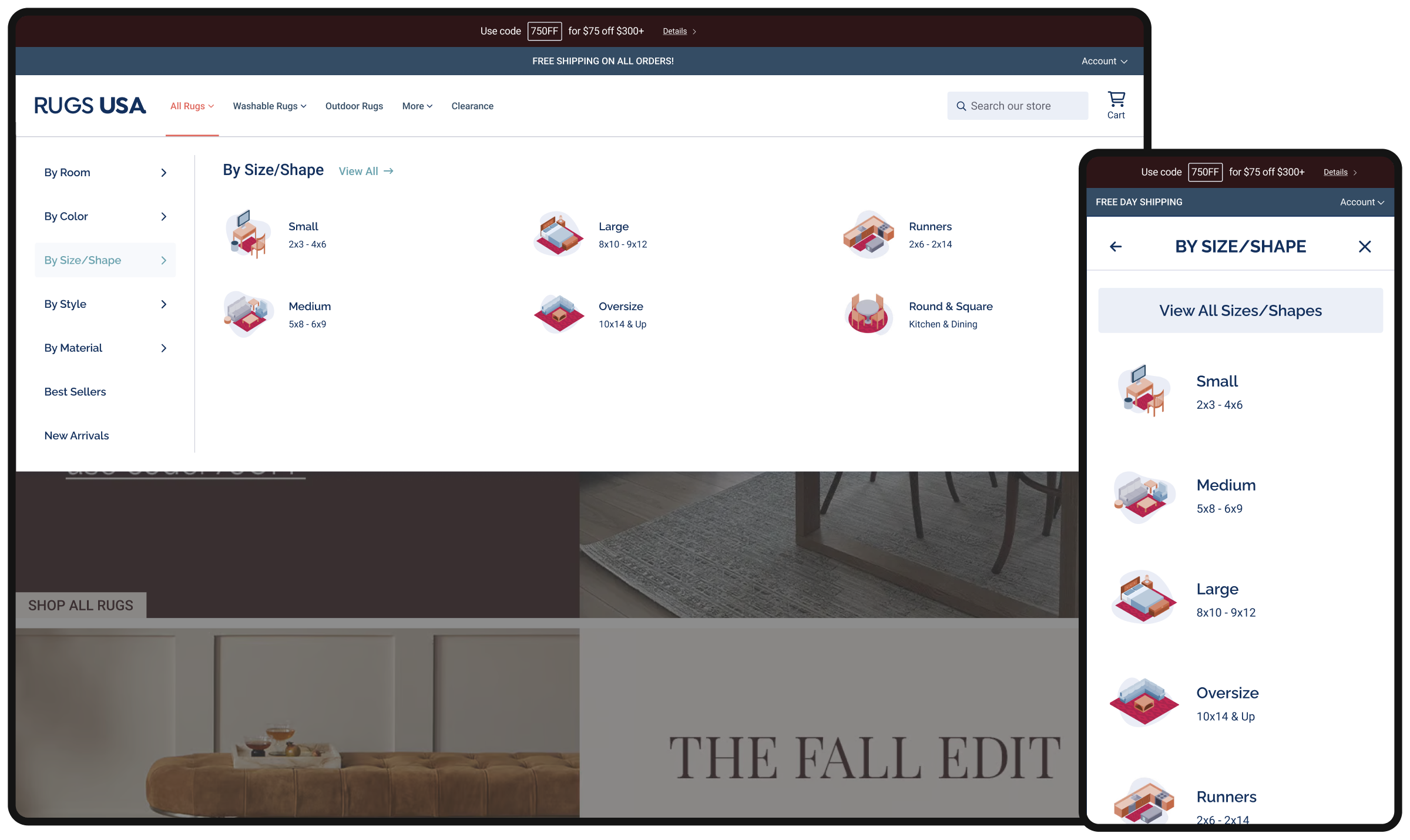
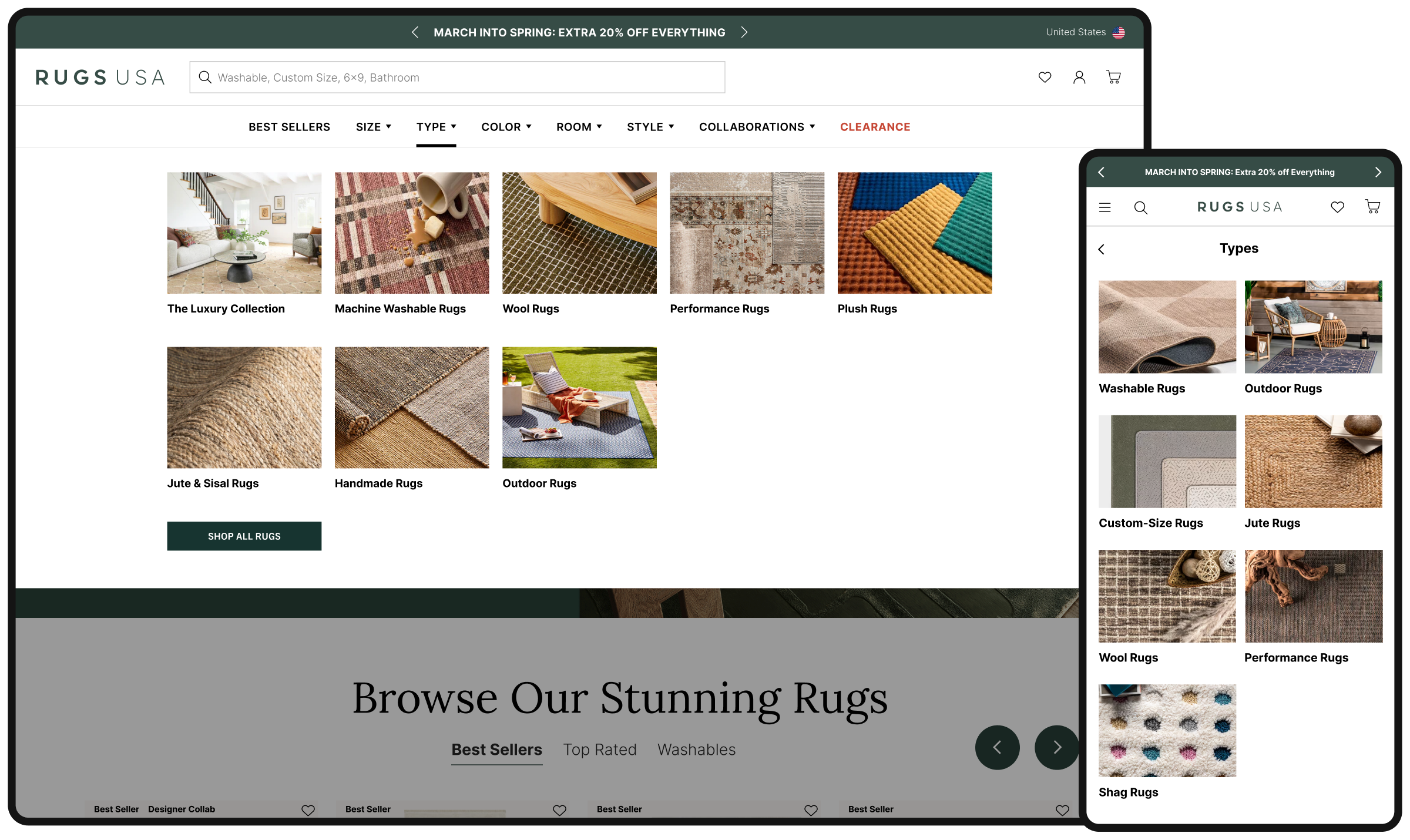
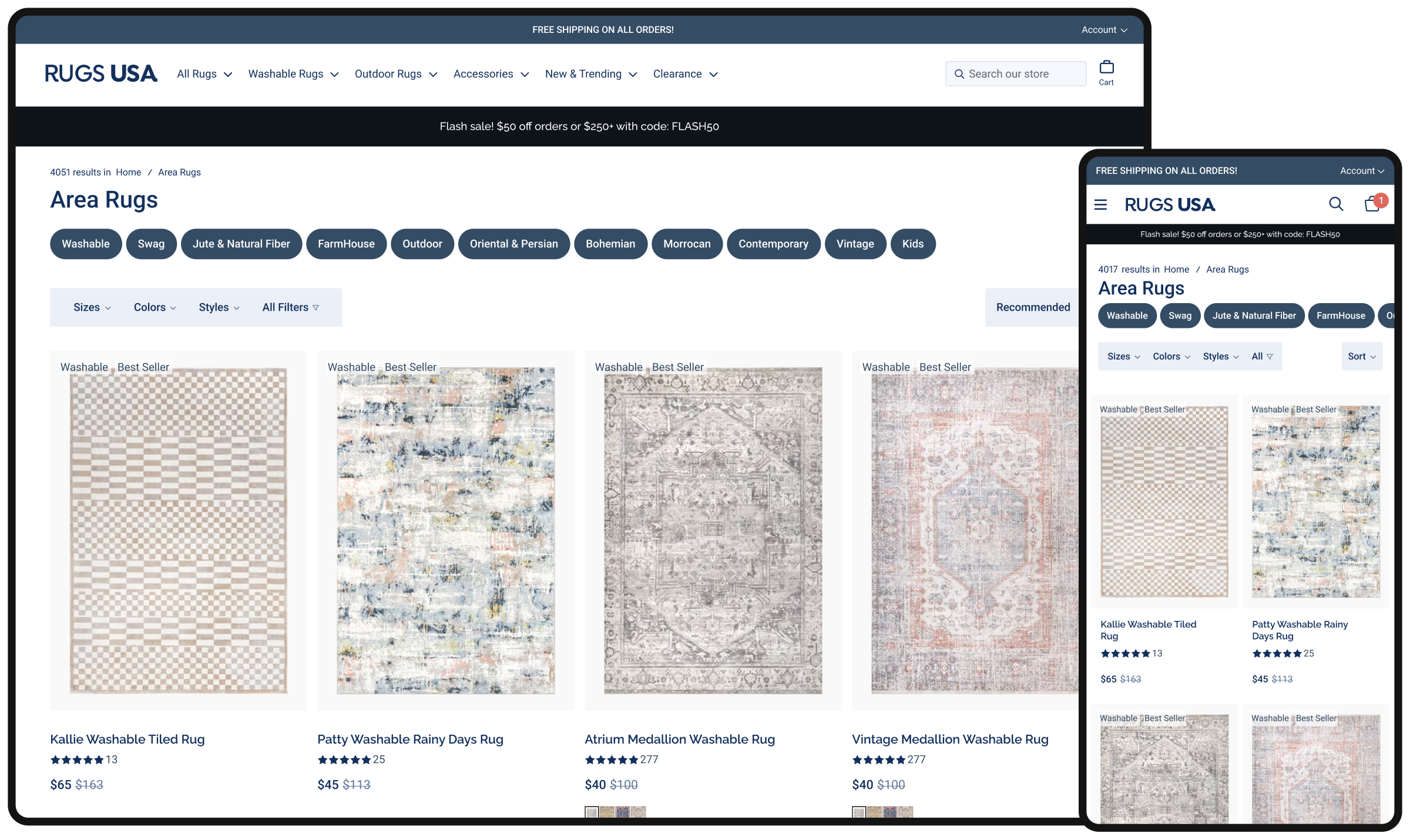
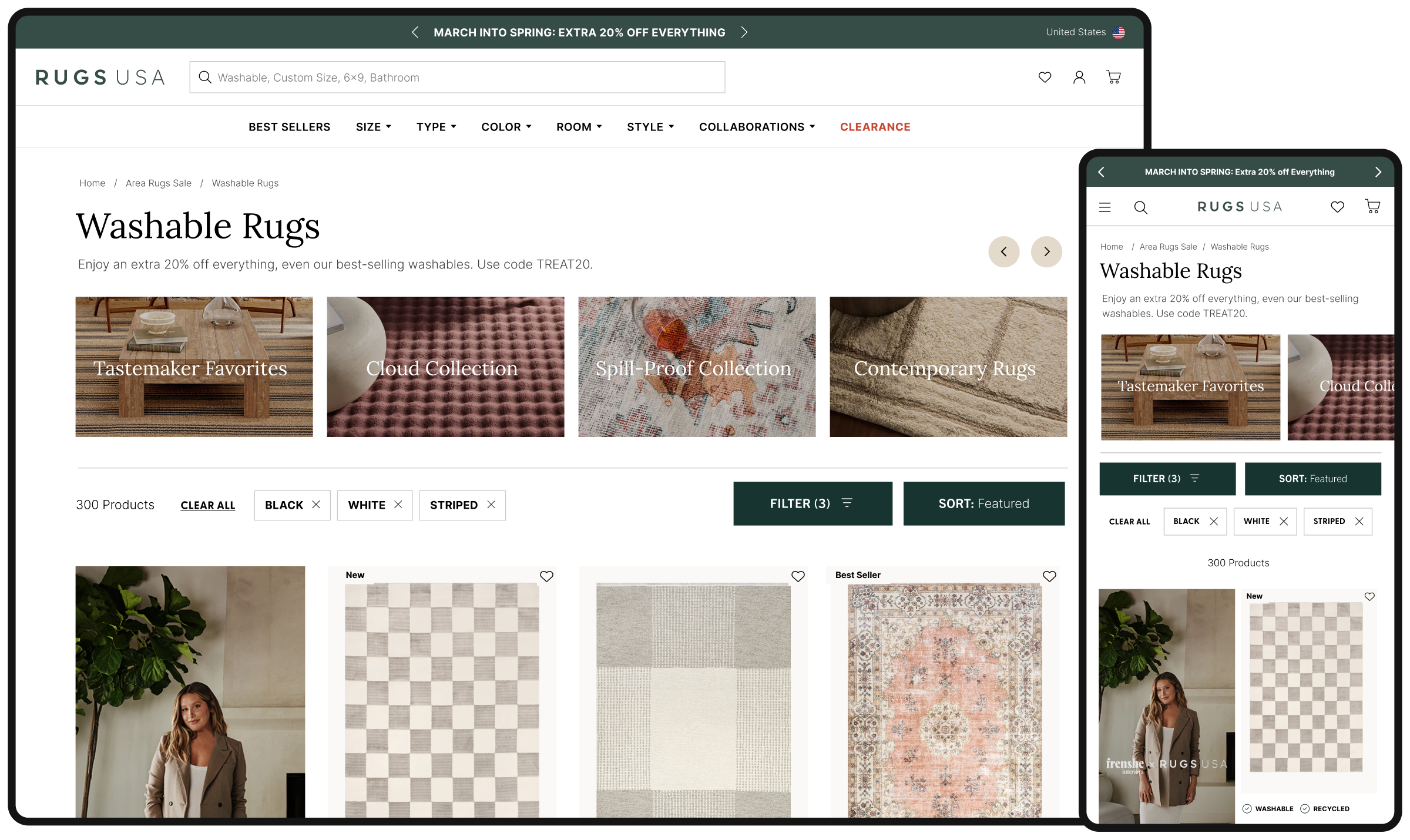
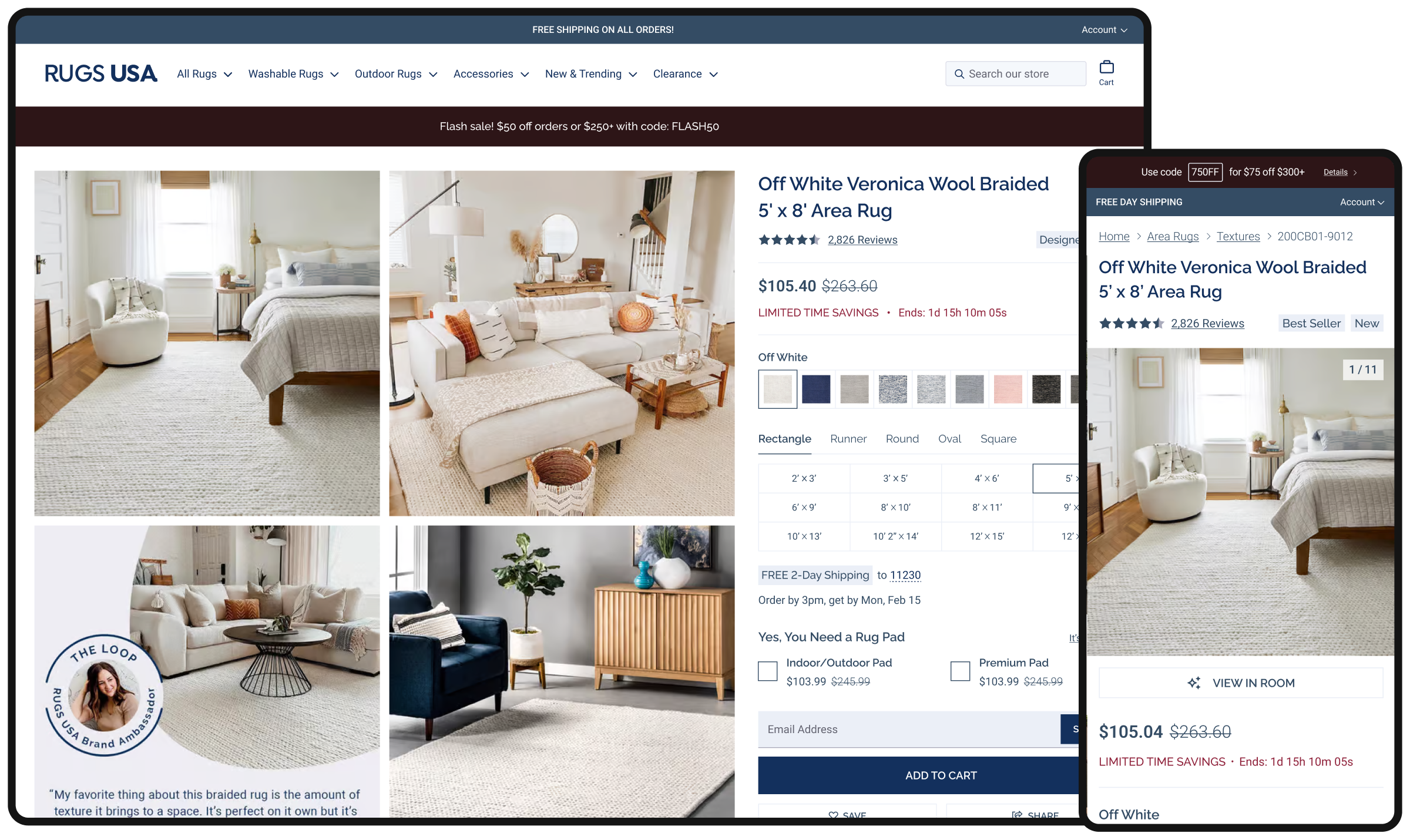
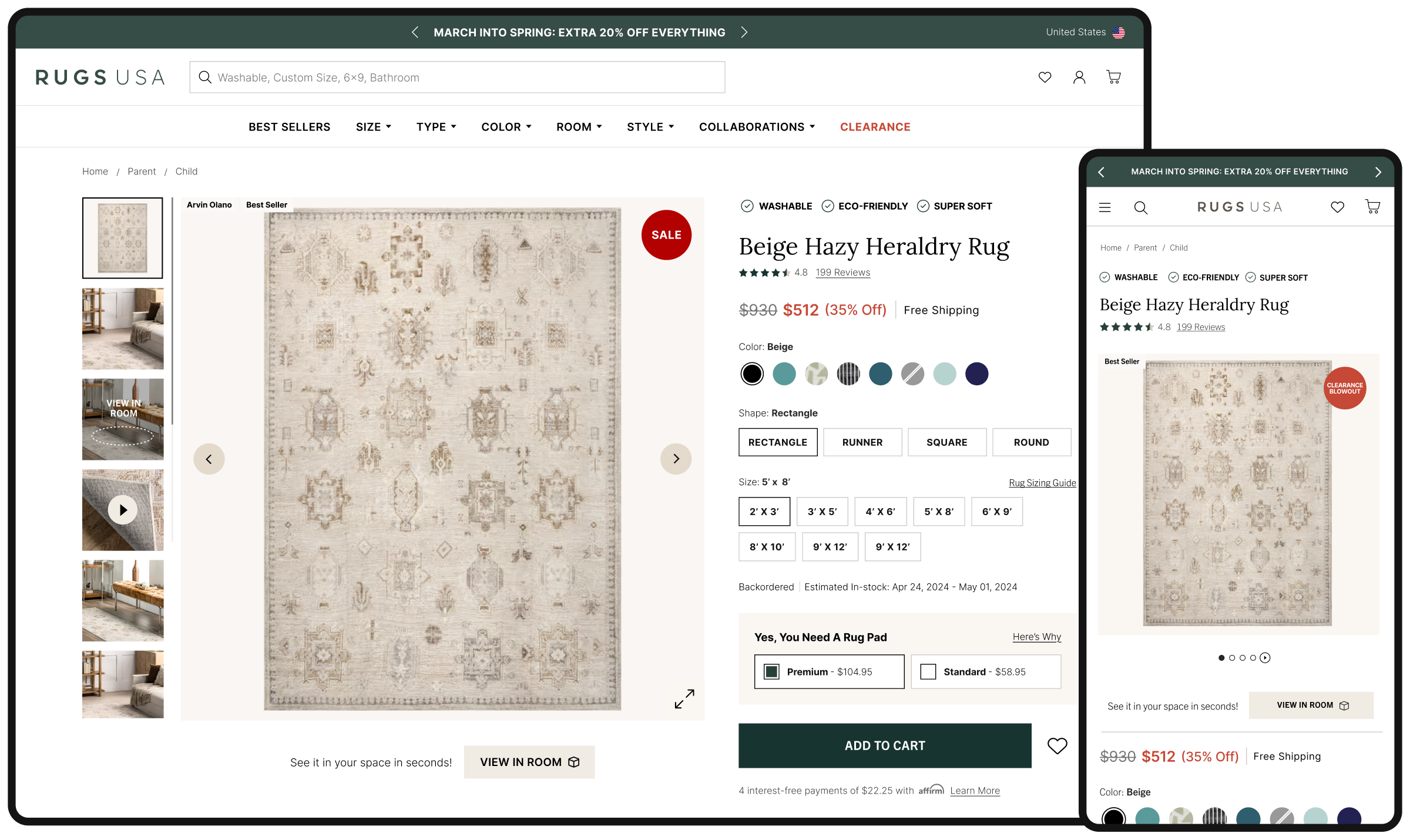
Before & After
Each page was redesigned from the ground up on Shopify, modernizing the visual language while preserving the brand equity built over years on the legacy platform. Shown below: Rugs USA.
QA Innovation
Company-Wide Bug Bounty
Transformed traditional UAT into a gamified scavenger hunt that drove unprecedented engagement across the organization while uncovering critical issues before launch.
The Challenge
Traditional UAT processes struggle with engagement and depth of testing. With aggressive timelines (7 months for Rugs USA, 2 months for Annie Selke D2C), we needed comprehensive coverage across complex user journeys while maintaining enthusiasm throughout the migration process.
The Approach
Scattered cryptic clues throughout the staging site forcing deep exploration of every user journey:
- What is the CMO's favorite rug?
- Find the CRO's badge of approval
- Discover the hidden dad joke
Built custom Jira dashboards displaying individual and department rankings. Marketing vs. Engineering vs. Operations competing for most tickets, most critical bugs, and most unique discoveries. Team rivalry drove participation well beyond typical UAT engagement.
Seven prize categories ensured recognition across contribution types: scavenger hunt completion, most critical bug, most tickets submitted, most obscure bug (desktop and mobile), most helpful survey responses, and department champion. Multiple winners drove sustained participation.
Company-wide emails from leadership with leaderboard standings, new clue releases, highlighted discoveries, and shoutouts to top contributors. Board members requested updates after seeing engagement levels. Kept momentum high and reinforced that quality launches require cross-functional participation.
Ticket Distribution by Severity
A finance team member discovered the add-to-cart button wasn't consistently functioning across product pages. Escalated immediately. This would have been a direct revenue-blocker post-launch. The bug bounty's cross-functional reach surfaced what conventional QA missed.
The Impact
The gamified format didn’t just boost participation numbers. It fundamentally changed how testing happened. Testers navigated complete user journeys, surfaced edge cases outside normal QA scope, and caught issues that would have reached production undetected.
Deployed across both Rugs USA and Annie Selke D2C launches with identical results. The methodology is now a repeatable internal standard for future platform migrations.
Strategic Approach
Four Pillars
A 12-month migration across three brands required a clear strategic framework: consolidating infrastructure, unifying design, integrating best-in-class vendors, and orchestrating zero-downtime launches.
Migrated three brands onto shared Shopify infrastructure, eliminating redundant tooling and renegotiating vendor contracts at scale. As part of M&A tech consolidation, Annie Selke was brought onto Salsify for the first time, unifying product data across the entire portfolio onto a single platform. This resolved a fundamental data fragmentation problem inherited from the acquisition and reduced annual platform spend from $3.7M to $2.7M.
Built a shared component library with brand-specific theming so each property maintained a distinct visual identity on shared architecture. Rugs USA's system became the reusable foundation, compressing Annie Selke D2C to a 2-month window and B2B to 3 months.
Evaluated, selected, and integrated a curated vendor stack including Roomvo AR, Fast Simon search and recommendations, and Okendo reviews. Tools were chosen to compound on each other rather than duplicate functionality. The AR integration alone drove a 5.8x conversion multiplier on engaged sessions.
Developed a repeatable launch playbook used across all three properties, coordinating engineering, QA, merchandising, and vendor partners through a structured release process. Paired with the gamified Bug Bounty program, each go-live achieved zero downtime and zero revenue-impacting incidents.
Results
By the Numbers
A 12-month migration across three brands delivered measurable improvement across every tracked metric while maintaining $145.9M in annual revenue through a 1.6% traffic decline.
Conversion rate
Annual savings
AR conversion
Avg. order value
Conversion rate: before vs. after
Revenue maintained through headwinds
$145.9M held despite a traffic decline
Industry-wide traffic softness pulled visits down 1.6% post-launch. Conversion improvements absorbed the decline entirely, keeping revenue flat rather than letting it fall in proportion to traffic.
Cost consolidation breakdown
Pre-migration, three properties ran on separate contracts across duplicate vendors. Consolidating onto a single Shopify Plus instance with unified vendor relationships eliminated that overhead entirely.
Reinvested in higher-impact capabilities rather than duplicated overhead.
Launch velocity enabled by shared design system
Each subsequent launch was faster because the foundation was already built. What took 7 months the first time took 2 the second.
Takeaway
This wasn't a redesign. It was an infrastructure decision dressed as a design project.
The CVR gains and cost savings are real. The deeper value was architectural. By treating the migration as a platform strategy rather than a lift-and-shift, we built the foundation for every brand, every feature, and every vendor integration that follows. That is the kind of leverage a design leader creates: not just shipping screens but shaping the systems that make future work faster, cheaper, and better.