Google Shopping Mini PDP
Google Shopping is how shoppers browse rugs across every site simultaneously. When they click a PLA ad and land on a standard PDP, there is one product and nowhere to go. This project redesigned that landing experience as a hybrid Mini PDP: satisfying Google's product page requirement while immediately opening into a full browse grid below. A 186K-visitor A/B test confirmed it worked.
Google Shopping is their PLP. We needed to replace it.
Most shoppers use the Google Shopping tab the same way they use a product listing page: browsing thumbnails, scanning prices, comparing options across multiple sites simultaneously. When they click a PLA ad and land on a standard PDP, they see one product in isolation. If it is not a perfect match, they hit back. We were sending them to a dead end and losing the session entirely.
Google Shopping
Browsing rugs across every site simultaneously
Clicks PLA Ad
High intent, a specific product caught their eye
Lands on PDP
One product, no path to browse
Not an exact match
No similar products to explore
Bounce
Back to Google. Session lost. Ad spend wasted.
The real goal: replace Google as their browsing surface
A standard PDP only works if the clicked product is exactly what the user wants. But PLA shoppers are still in browse mode. Google Shopping is their PLP, and they are comparing options across multiple sites at once. The opportunity was to satisfy the PDP requirement while immediately surfacing a full browsing experience below. If we could replicate the Google Shopping tab on our own site, we could keep them here instead of sending them back to Google.
A hybrid that looks like a PLP, performs like a PDP
Google requires PLA landing pages to include core product information. But a full PDP puts all the weight on one product being an exact match. The Mini PDP satisfies the PDP requirement with minimum viable product information, then immediately opens into a product listing experience below: giving users a reason to stay on our site rather than returning to Google.
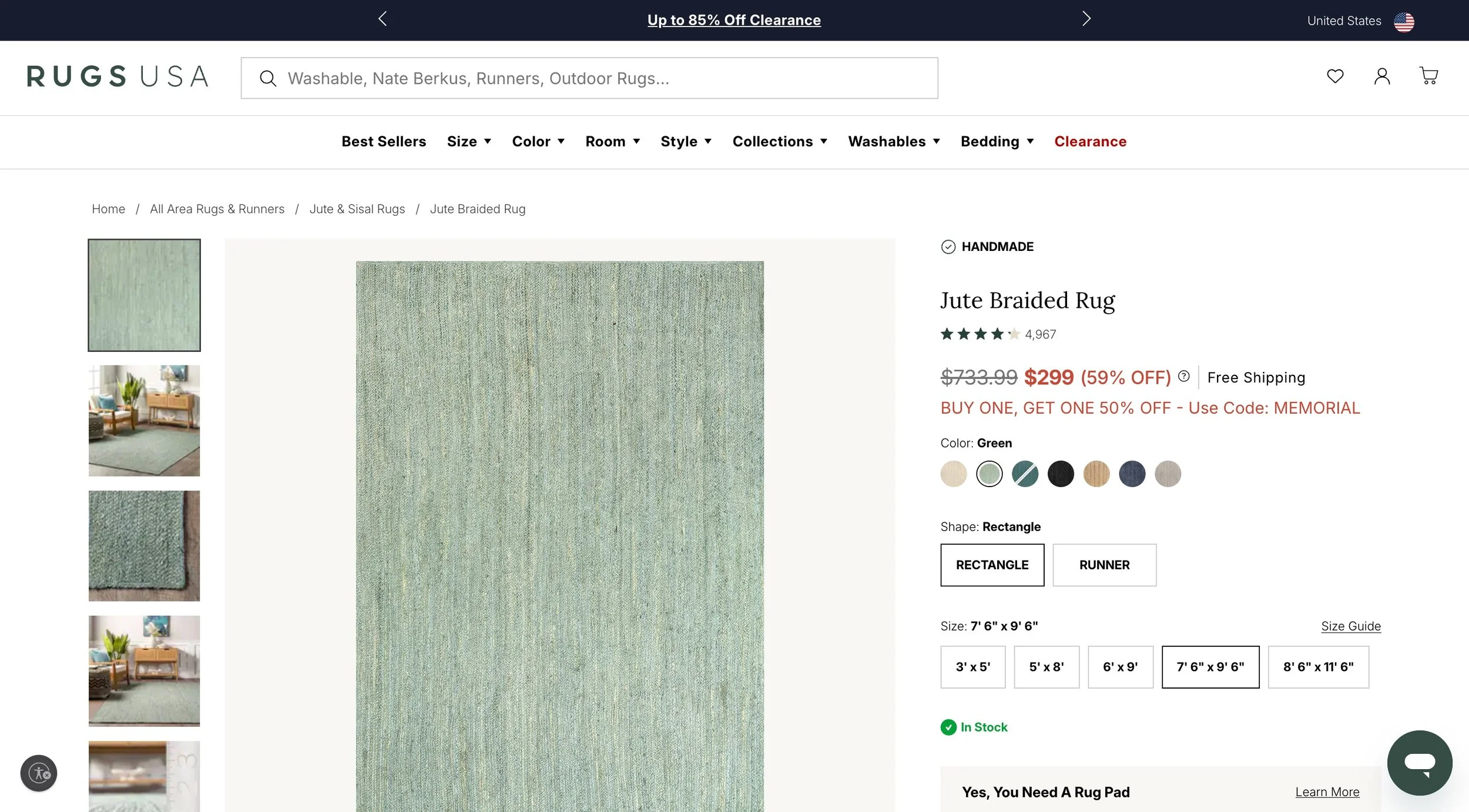
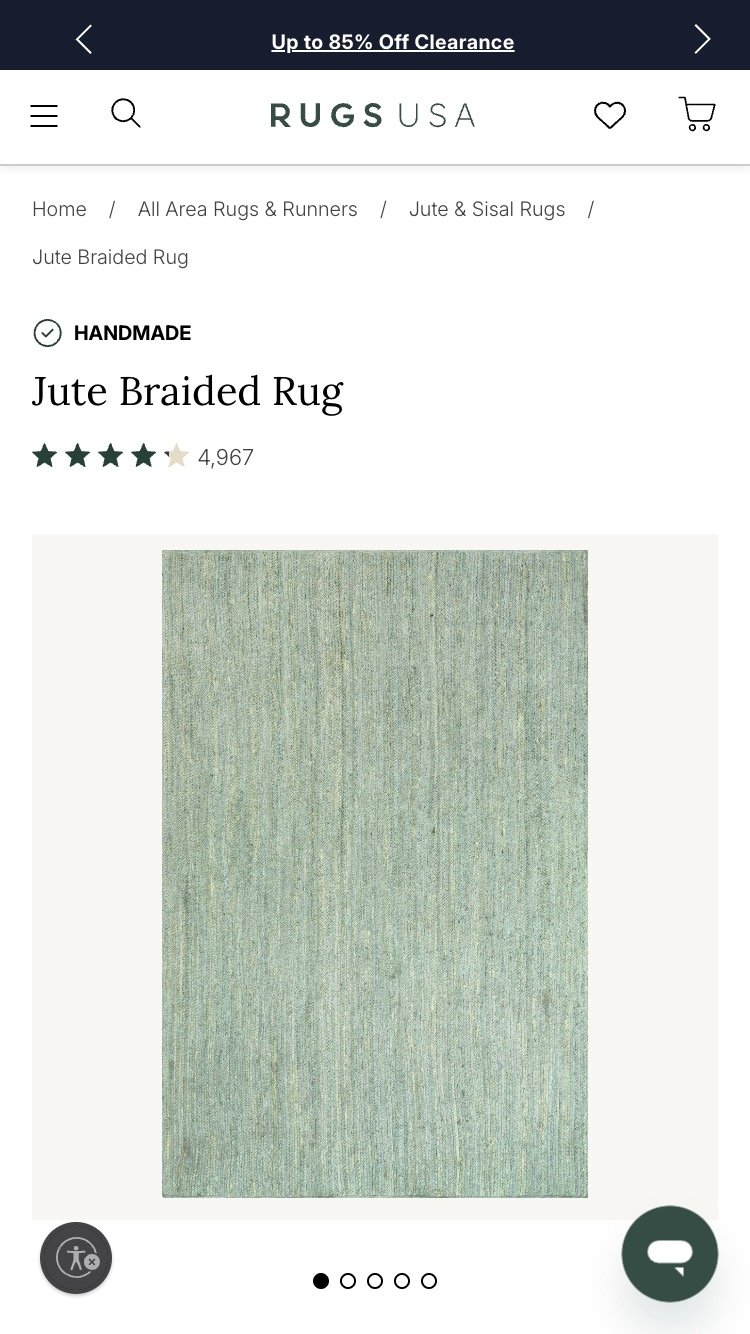
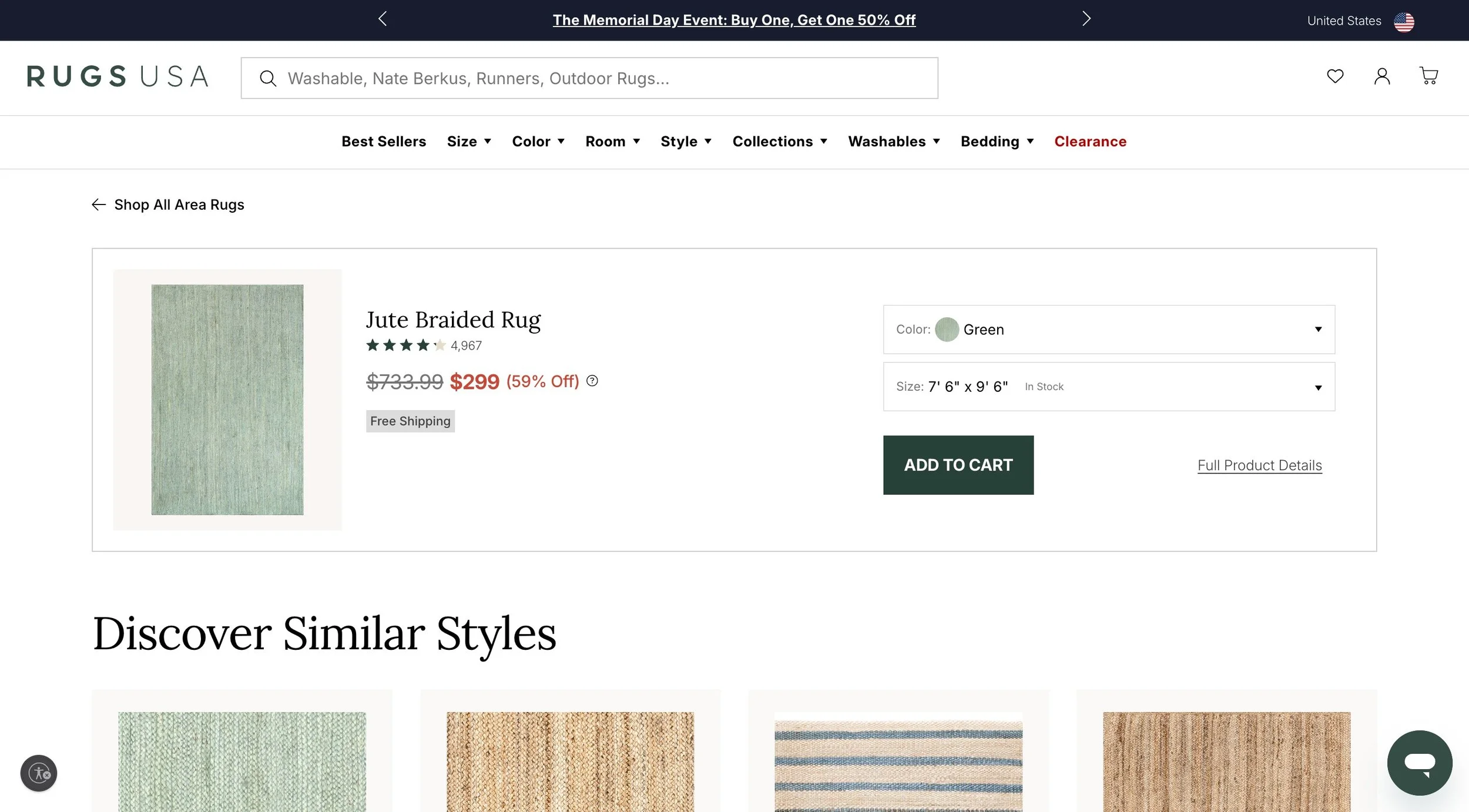
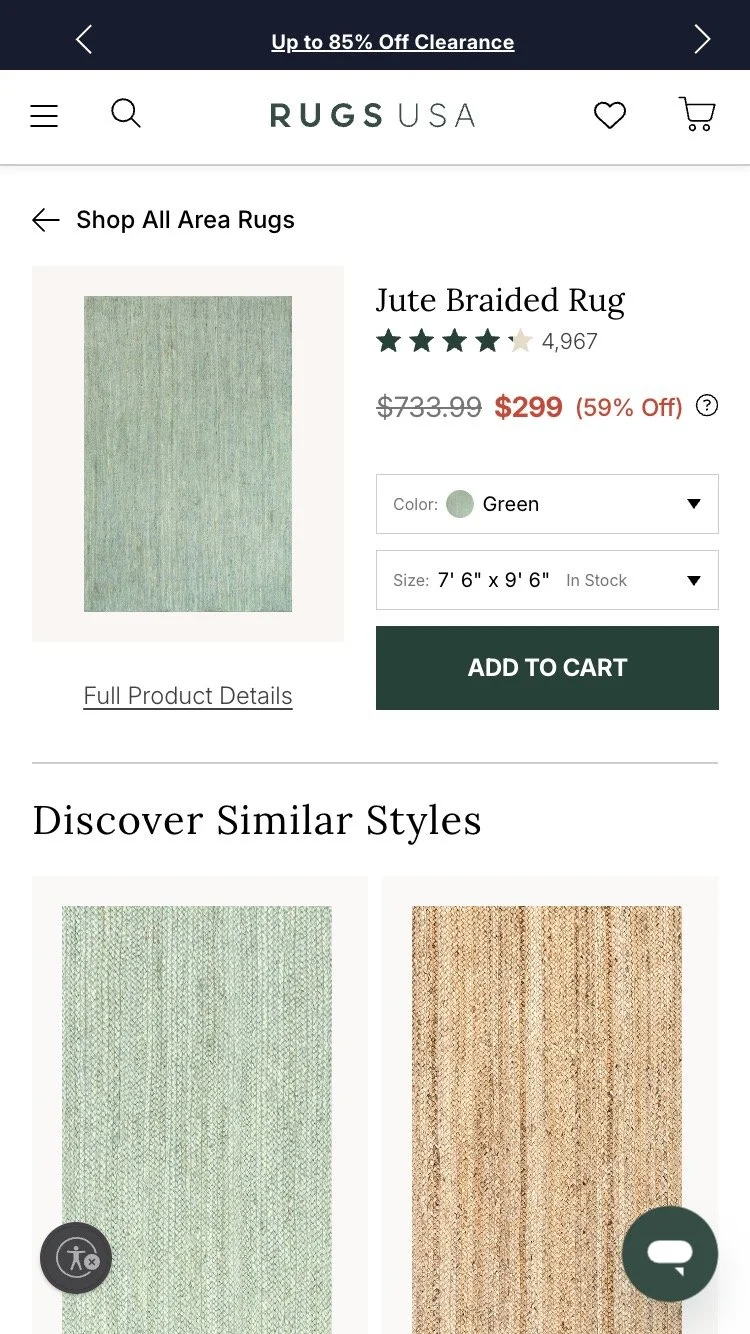
Satisfies Google's PDP requirement with name, price, size selector, and add to cart: presented as leanly as possible so the browse grid appears immediately.
Similar and recommended products appear immediately: replicating the Google Shopping tab on our own site so users have a reason to stay and browse.
PLA visitors rarely convert in a single session. The Mini PDP plants a flag: expose them to the brand and price point so that when they return, Rugs USA is already in consideration.
Measuring what actually matters for PLA traffic.
Conversion rate is the wrong primary metric for Google Shopping traffic. PLA shoppers are in browse mode: they may convert days later, on a different device, in a follow-up session. The metrics that matter are engagement and consideration. On both counts, the Mini PDP delivered at 100% statistical confidence.
Down from 30.6% to 20.0%. Nearly 10,000 fewer visitors left without engaging across the test window.
Up from 66.9% to 77.9% of sessions. Visitors clicked through to the full PDP: exactly the intent the Mini PDP was designed to honor.
The bounce and page view results tell the real story
Instead of viewing one product in isolation and returning to Google, visitors stayed on site, browsed the catalogue, and entered a consideration session. They moved from Google's PLP to ours. That is the conversion event that matters for this traffic source and it happened at 100% statistical confidence.
Takeaway
Google Shopping was their PLP. We made ours the destination instead.
PLA shoppers are not looking for one product. They are using Google Shopping as a product listing page and comparing options across every site simultaneously. Sending them to a standard PDP meant competing on Google's terms, on Google's surface. The Mini PDP shifted that. By giving visitors a reason to browse on our site instead of returning to Google, we stopped renting attention and started owning it. The 100% confidence results did not just validate a layout change. They validated a different way of thinking about paid traffic.